Hyundai HE1i Electric SUV Explained: Launch Details, Design Insight, and Latest Updates
The Hyundai HE1i electric SUV is a topic of interest for readers following upcoming Hyundai electric cars in India. Interest in compact electric SUVs has grown as Indian motorists explore alternatives to petrol and diesel vehicles, with particular attention to driving range, charging infrastructure, safety technology, and everyday practicality.
Introduction
However, it is important to distinguish confirmed vehicle specifications from industry speculation. The Hyundai HE1i name alone does not establish an official production model, launch date, battery configuration, or final specifications. Information about its expected price, interior features, and performance should therefore be treated cautiously unless supported by an official Hyundai announcement.
This guide examines the available context, the features prospective buyers may want to understand, India's electric-vehicle regulations, and reliable resources for tracking future updates.
Understanding the Hyundai HE1i Electric SUV
The Hyundai HE1i electric SUV is associated with interest in Hyundai's future electric vehicle plans for the Indian market. Readers searching for Hyundai HE1i latest news commonly want to understand whether the vehicle is intended to be an affordable electric SUV, how its design might compare with existing models, and when additional details could become available.
Important search topics include:
Hyundai HE1i launch date 2026 and Hyundai HE1i India launch
Hyundai HE1i expected price and potential market positioning
Hyundai HE1i spy shots and Hyundai HE1i design details
Hyundai HE1i battery options and Hyundai HE1i real range
Hyundai HE1i fast charging and infotainment system
Hyundai HE1i rivals in India, including the Tata Punch EV and Tata Nexon EV
These search terms describe areas of consumer interest, not confirmation that every feature or specification exists on a production vehicle.
Why the Hyundai HE1i Matters in India's Electric SUV Market
Electric SUVs are becoming an important part of India's changing passenger-vehicle market. They combine the raised seating position and practical cabin space associated with SUVs with electric propulsion, which can reduce tailpipe emissions and dependence on petrol or diesel.
If Hyundai introduces a compact electric SUV under the HE1i name, its importance would depend on several factors:
Affordability: The Hyundai HE1i expected price would influence its appeal to first-time EV owners and households comparing electric and conventional vehicles.
Driving range: The Hyundai HE1i real range would help drivers assess daily commuting, weekend travel, and longer journeys.
Charging access: Home charging, public fast chargers, and charging time affect everyday convenience.
Safety: Structural protection, airbags, electronic stability control, and driver-assistance technology are important considerations.
Cabin technology: Infotainment, smartphone connectivity, navigation, and practical storage can influence the overall driving experience.
The vehicle's actual market position cannot be established until Hyundai confirms its identity, specifications, and intended segment.
Hyundai HE1i Design Details and Interior Features
Searches for Hyundai HE1i exterior design and interior features reflect interest in how a future model might look and function. However, without verified production images or official specifications, it would be inaccurate to describe particular styling elements as confirmed features.
Potential areas to examine when official images become available include:
Exterior design: Headlamp arrangement, front lighting signature, wheel design, aerodynamic details, and ground clearance.
Interior layout: Dashboard design, seat comfort, rear-seat space, visibility, and luggage capacity.
Digital displays: Instrument cluster, touchscreen size, navigation, and smartphone integration.
Practical features: Rear air vents, charging ports, storage compartments, and climate controls.
Safety equipment: Airbags, rear parking sensors, cameras, and electronic stability systems.
A useful evaluation should distinguish standard equipment from optional features. Images of a prototype may also differ from the final production vehicle.
Hyundai HE1i Battery Options, Range, and Charging
Battery capacity and energy efficiency are central to an electric SUV's usability. Hyundai HE1i battery options, Hyundai HE1i standard range vs long range, and Hyundai HE1i fast charging are therefore relevant research topics, although no HE1i-specific figures should be assumed without official confirmation.
Feature | What to examine |
|---|---|
Battery capacity | Usable battery capacity in kWh |
Driving range | Official test-cycle range and real-world results |
Energy efficiency | Electricity consumption per 100 km |
AC charging | Charging time with a compatible home or public charger |
DC fast charging | Supported peak power and charging time within a stated battery range |
Battery warranty | Duration, distance limits, and coverage conditions |
The Hyundai HE1i real range, if the vehicle is confirmed, would depend on driving speed, traffic, air-conditioning use, passenger load, road conditions, temperature, and driving style.
Standard range versus long range: If Hyundai eventually provides multiple battery configurations, a smaller battery could suit shorter commutes, while a larger battery could be more useful for frequent highway travel. The final comparison should consider verified range, charging compatibility, vehicle weight, and the published price difference.
It is also important not to assume that the HE1i uses Hyundai's E-GMP platform. The search phrase “Hyundai HE1i E-GMP K platform” does not establish its underlying architecture. The platform and battery chemistry need official confirmation.
Infotainment, ADAS, and Connected Technology
Modern electric SUVs may include touchscreen infotainment, digital instruments, connected navigation, and driver-assistance systems. Whether the Hyundai HE1i infotainment system includes particular functions remains unconfirmed.
Similarly, Hyundai HE1i Level 2 ADAS is a search topic, not a verified specification. Level 2 driver assistance generally combines features such as adaptive cruise control and lane-centering assistance under defined operating conditions. It does not make a vehicle fully autonomous, and the driver must remain attentive and ready to take control.
When evaluating future specifications, readers should check:
Which ADAS functions are included in each variant.
Whether lane assistance works on clearly marked roads and within defined speed limits.
How navigation and connected functions depend on network availability.
Whether software updates can be installed remotely or require a workshop visit.
What limitations are described in the owner's manual.
Technology descriptions should be based on the actual equipment list rather than assumptions drawn from another Hyundai model.
Recent Updates on Hyundai Electric Cars in India
As of October 2026, Hyundai has announced developments in its Indian electric-vehicle strategy, but the available official announcements do not establish the HE1i name as a confirmed production model.
Several developments provide useful context for readers tracking Hyundai HE1i launch date 2026 and Hyundai HE1i India launch.
April 28, 2026: Hyundai Motor India announced an updated IONIQ 5 with an 84.0 kWh battery and a claimed driving range of up to 690 km. This is a specification for the IONIQ 5, not the HE1i.
September 9, 2026: Hyundai announced new 120 kW DC fast-charging stations at selected locations in New Delhi and discussed plans for a locally developed mass-market electric SUV on a dedicated EV platform.
October 2026: Hyundai Motor's global product roadmap identified an all-new A-segment electric SUV for India, with a planned launch in the fourth quarter. The announcement did not identify this vehicle as the HE1i.
October 13, 2026: Hyundai Motor Group announced an investment commitment of USD 15.5 billion in India from 2026 through 2032, covering manufacturing, research and development, suppliers, and future technologies.
These developments indicate continued investment in India's automotive and electric-mobility ecosystem. They do not confirm the HE1i's launch date, specifications, or expected price.
Hyundai HE1i Expected Price and Rivals in India
The Hyundai HE1i expected price cannot be reliably estimated without confirmation of its identity, positioning, and specifications. Any figures circulating without an identifiable official source should be treated as unverified estimates.
If Hyundai introduces an affordable electric SUV, relevant comparisons could include the following models.
Electric SUV | Comparison focus |
|---|---|
Tata Punch EV | Compact dimensions and urban driving |
Tata Nexon EV | Cabin practicality, range, and equipment |
Hyundai CRETA Electric | Hyundai's existing electric SUV offering |
Hyundai IONIQ 5 | Premium electric technology and long-distance capability |
These are comparison references, not confirmed direct competitors. The HE1i's segment and positioning would need to be established first.
Price disclaimer: No estimated price is assigned to the HE1i because its identity and specifications have not been officially verified. Any future price figures should be checked against Hyundai's published announcements and applicable variant details.
Laws, Policies, and Government Programs
Electric vehicles in India are affected by vehicle certification requirements, road regulations, taxation, and central or state electric-mobility policies.
Important considerations include:
Vehicle homologation: A production vehicle must satisfy applicable Indian safety, technical, and regulatory requirements before it can be registered for road use.
Registration and road taxes: Charges and exemptions can vary by state, vehicle category, and the rules in force when registration takes place.
PM E-DRIVE: The central government's PM Electric Drive Revolution in Innovative Vehicle Enhancement scheme supports specified electric-vehicle categories and charging infrastructure. Eligibility depends on the applicable scheme provisions; incentives should not be assumed for every electric passenger car.
Charging infrastructure: Public charging availability, electrical installation requirements, and local arrangements affect how easily owners can charge an EV.
Battery and safety requirements: Applicable automotive safety standards and battery-related requirements influence vehicle approval and operation.
Readers should consult official government notifications and state transport authorities for the latest requirements rather than relying on older incentive announcements.
Tools and Resources for Research
The following resources can help readers verify Hyundai HE1i latest news and assess electric SUVs objectively.
Hyundai Motor India: Official website for announcements, specifications, and confirmed model information.
Hyundai India press releases: Media centre for product announcements and launch updates.
PM E-DRIVE: Official portal for scheme notifications and eligibility information.
Charging applications: Use compatible charging-network apps to check station locations, connector types, availability information, and applicable charging tariffs.
Range calculators: Estimate daily electricity consumption using expected kilometres travelled and a vehicle's verified energy consumption per kilometre. Treat calculator results as estimates, not guaranteed range figures.
Frequently Asked Questions
Is the Hyundai HE1i launch date confirmed for 2026?
No confirmed launch date for a vehicle specifically named Hyundai HE1i has been established by the official announcements cited here. Hyundai has announced plans for a new electric SUV in India, but its identity should not automatically be equated with the HE1i.
What is the expected price of the Hyundai HE1i in India?
An official price has not been verified. Any estimated price should be treated as speculative until Hyundai publishes confirmed pricing and variant information.
What is the Hyundai HE1i real range?
The real-world range is unknown because verified HE1i battery and efficiency specifications are unavailable. Range will ultimately depend on battery capacity, driving conditions, temperature, and vehicle configuration.
Will the Hyundai HE1i have Level 2 ADAS and fast charging?
These features have not been confirmed for a vehicle specifically identified as the HE1i. Official specifications will be needed to establish its driver-assistance functions, charging power, and charging times.
Will the Hyundai HE1i compete with the Tata Punch EV and Tata Nexon EV?
They are useful comparison models for research into compact and mainstream electric SUVs. Whether either is a direct competitor will depend on the HE1i's confirmed segment, dimensions, price, and specifications.
Conclusion
The Hyundai HE1i electric SUV is a subject of interest for people researching upcoming Hyundai electric cars in India. Launch timing, expected price, battery options, real-world range, exterior design, infotainment, and ADAS are all important topics to monitor.
For now, the most reliable approach is to separate confirmed developments in Hyundai's electric-vehicle strategy from unverified claims about the HE1i itself. Official announcements, published specifications, and applicable government regulations will provide a clearer picture as further information becomes available.

Related Post...

Airport Cab Booking Guide: Explore Tips, Insight, Advice, and Useful Travel Info
Updated: September 25, 2026
Read More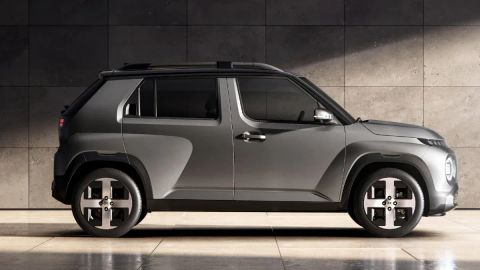
Hyundai HE1i Electric SUV Overview: Learn EV Basics, Launch Information, Feature, and Insights
Updated: September 17, 2026
Read More