Explore Industrial Forklift Truck Systems: A Guide to Benefit, Basics, and Resource
Industrial forklift truck systems are an important part of modern material movement in factories, warehouses, distribution centers, ports, and other industrial environments. These systems help move, lift, stack, and position palletized or packaged materials while reducing the need for repeated manual handling.
The term covers several types of equipment, including counterbalance forklifts, Reach Truck models, electric warehouse forklifts, warehouse forklift equipment, and automated forklift systems. The appropriate system depends on factors such as load weight, lifting height, aisle width, floor conditions, operating hours, and the layout of the facility.
Context
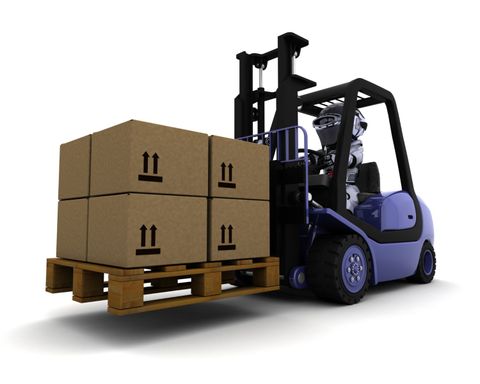
A forklift is a powered industrial vehicle designed to move materials over relatively short distances. A typical forklift has a mast, forks, wheels, a lifting mechanism, and a power system. Some models are operated by a seated driver, while others are designed for a standing or walking operator.
Industrial forklift trucks exist because warehouses and manufacturing facilities frequently need to move heavy or bulky materials between receiving areas, storage locations, production zones, and dispatch areas.
Common applications include:
- Moving pallets between warehouse zones
- Loading and unloading materials
- Placing products on storage racks
- Supplying materials to production lines
- Moving containers and packaged goods
- Supporting warehouse material handling systems
- Handling materials in distribution and logistics facilities
A forklift truck rental arrangement can also be used by organizations that need temporary equipment capacity or want flexibility for changing warehouse requirements. The appropriate arrangement depends on operating duration, equipment specifications, and local requirements.
Importance
Efficient material movement affects warehouse productivity, workplace organization, inventory handling, and worker safety. Poorly planned movement can create congestion, unnecessary travel, damaged materials, and risks around pedestrians.
The topic is particularly relevant to:
- Manufacturing facilities
- E-commerce warehouses
- Retail distribution centers
- Food and beverage facilities
- Automotive plants
- Construction-material warehouses
- Third-party logistics facilities
- Ports and freight terminals
Modern warehouses increasingly combine conventional equipment with digital controls, fleet monitoring, sensors, and automation. This has expanded the role of forklifts from basic lifting machines into components of wider warehouse automation solutions.
Electric Warehouse Forklift models are also becoming more relevant for indoor applications. Battery-powered equipment can be considered where indoor air quality, noise, charging arrangements, and operating patterns are important planning factors.
Types
Different forklift configurations are designed for different working environments.
| Forklift Type | Typical Application | Key Characteristic |
|---|---|---|
| Counterbalance Forklift | General warehouse and factory work | Counterweight balances the load |
| Reach Truck | High-rack warehouse operations | Designed for narrow aisles and elevated storage |
| Electric Forklift | Indoor material movement | Battery-powered operation |
| Internal Combustion Forklift | Outdoor and demanding applications | Uses fuel-based power systems |
| Pallet Truck | Horizontal pallet movement | Compact material movement |
| Order Picker | Picking from storage locations | Operator works at picking height |
| Rough-Terrain Forklift | Construction and outdoor areas | Designed for uneven surfaces |
| Automated Forklift | Repetitive material movement | Uses sensors, navigation, or control systems |
Reach Truck forklifts are particularly associated with warehouses where storage racks are high and aisle space is limited. Their design allows operators to position loads in elevated rack locations while maintaining a relatively compact operating footprint.
Automated forklift systems can use technologies such as sensors, navigation systems, cameras, software controls, and warehouse-management integrations. Their suitability depends heavily on facility layout and the consistency of material-flow routes.
Benefits and Applications
Industrial forklift trucks can support several operational objectives when the equipment is correctly selected and operated.
Material movement
Forklifts allow palletized and packaged materials to be moved between different areas of a facility. This can reduce repetitive manual carrying and make organized material flows possible.
Vertical storage
Reach Truck equipment can support high-density storage arrangements by placing pallets at elevated rack positions. This can be useful where available floor area is limited.
Warehouse organization
Warehouse forklift equipment can help create defined movement patterns between receiving, storage, picking, production, and dispatch areas.
Electric operation
Electric models can be appropriate for many indoor environments. Battery technology is also evolving, including lithium-ion and newer battery configurations designed around charging speed, operating cycles, and energy management.
Automation
Automated forklift systems can support repetitive transport tasks. They may be integrated with warehouse management software, automated storage systems, sensors, and other warehouse automation solutions.
Material handling integration
Forklifts are often only one component of a larger material handling equipment environment. Conveyors, pallet systems, racks, scanners, warehouse software, and automated vehicles can work together as part of a warehouse material handling system.
When selecting equipment, important factors include:
- Maximum load capacity
- Load dimensions
- Required lifting height
- Aisle width
- Floor conditions
- Indoor or outdoor operation
- Battery or fuel requirements
- Operator visibility
- Pedestrian traffic
- Charging or refueling arrangements
- Compatibility with existing warehouse systems
Leading Providers
Several established companies operate in the global and Indian material-handling equipment market. Examples include:
- Godrej Enterprises Group
- Toyota Material Handling
- Jungheinrich
- KION Group
- Hyster-Yale Materials Handling
These companies have different product portfolios covering areas such as counterbalance forklifts, electric trucks, reach trucks, warehouse equipment, fleet technologies, and automation. Product availability and specifications vary by country and application, so users should consult manufacturer documentation when evaluating a particular model.
Recent Updates
Forklift technology has continued to evolve during 2025–2026, particularly around electrification, battery technology, connectivity, and automation.
In May 2026, Godrej Enterprises Group announced a Multi-Ion battery technology for electric forklifts in India. The announcement reflects the industry's continuing interest in alternative battery technologies and energy management for warehouse equipment.
In March 2026, SANY published guidance highlighting the growing role of electric forklifts and lithium-ion battery technology in Indian warehouse and factory environments. Battery selection, charging practices, and safety considerations remain important when introducing electric equipment.
More broadly, recent industry developments have focused on:
- Lithium-ion and alternative battery technologies
- Connected forklift fleets
- Operator-assistance technologies
- Automated material movement
- Warehouse robotics
- Data-based fleet monitoring
- Energy-efficient warehouse equipment
- Integration between forklifts and warehouse software
These developments do not mean that one technology is appropriate for every warehouse. Equipment selection should consider the actual operating environment, load requirements, infrastructure, safety procedures, and workflow.
Laws or Policies
In India, workplace safety requirements can affect the use of lifting and material-handling equipment. The Factories Act, 1948 includes provisions covering general worker safety, lifting machines, excessive weights, machinery, and workplace conditions.
Section 7A places general duties on factory occupiers concerning safe plant and systems of work, the handling and transport of articles and substances, and appropriate information, instruction, training, and supervision.
Section 29 addresses lifting machines, chains, ropes, and lifting tackles and includes requirements concerning maintenance, examination, safe working loads, and examination records.
The precise requirements applicable to a particular forklift operation can depend on the equipment, facility, state rules, industry, and applicable occupational-safety framework. Businesses should therefore verify current requirements with the relevant Indian authorities and competent safety professionals rather than relying on a general summary.
For comparison, in the United States, OSHA's 29 CFR 1910.178 establishes requirements for powered industrial trucks, including design, operation, maintenance, workplace conditions, and operator training. OSHA also emphasizes pre-use examination and appropriate training for operators.
Tools and Resources
Useful resources for understanding forklift systems include:
- OSHA Powered Industrial Trucks resources for safety information, training guidance, and operating practices.
- OSHA forklift eTool for explanations of truck types, workplace hazards, operation, and training.
- India Code for the Factories Act and related legislation.
- Manufacturer specification sheets for rated capacity, lifting height, dimensions, battery information, and operating requirements.
- Warehouse layout drawings for checking aisle widths and traffic patterns.
- Load-capacity calculations for evaluating whether a truck configuration is appropriate for a particular load.
- Forklift inspection checklists for documenting routine equipment checks.
- Fleet-management software for monitoring equipment utilization and operating data.
- Warehouse management systems for coordinating inventory movement and storage locations.
A useful planning process starts with the load rather than the brand or model. Measure typical load weight and dimensions, determine the required lift height, examine aisle width, identify indoor or outdoor conditions, and then evaluate appropriate equipment types.
FAQs
What is an industrial forklift truck?
An industrial forklift truck is a powered vehicle designed to lift, carry, stack, and position materials. It is commonly used in warehouses, manufacturing facilities, distribution centers, and other industrial environments.
What is a Reach Truck used for?
A Reach Truck is primarily designed for warehouse applications involving elevated pallet storage and relatively narrow aisles. Its configuration allows loads to be positioned at greater heights while supporting maneuverability within storage areas.
Are electric warehouse forklifts suitable for indoor facilities?
Electric warehouse forklifts can be suitable for many indoor applications. Their suitability depends on load requirements, operating hours, floor conditions, charging infrastructure, ventilation considerations, and the specific equipment configuration.
What are automated forklift systems?
Automated forklift systems use technologies such as sensors, navigation controls, cameras, software, or other automation technologies to perform material movement with reduced direct operator involvement. They are generally most useful where routes and material flows can be defined clearly.
What should be checked before selecting warehouse forklift equipment?
Important considerations include load capacity, lifting height, aisle width, load dimensions, floor conditions, power source, operating environment, pedestrian traffic, charging infrastructure, safety features, and compatibility with existing warehouse material handling systems.
Conclusion
Industrial forklift truck systems remain an important component of modern material handling. Their applications range from basic pallet movement to high-rack storage and increasingly automated warehouse operations.
Understanding the differences between counterbalance forklifts, Reach Truck models, electric warehouse forklifts, pallet trucks, and automated forklift systems can help organizations evaluate equipment according to actual operational requirements.
The wider development of warehouse automation solutions, connected equipment, and battery technologies is changing how material movement is planned. However, technology does not replace the need for appropriate equipment selection, trained operators, safe workplace design, inspections, and compliance with applicable regulations.
For any specific equipment or project, technical specifications, capacity data, regulatory requirements, and manufacturer documentation should be reviewed before implementation.
Informational disclaimer: Any equipment, rental, or package-related figures that may appear in third-party materials are estimates and can vary by specification, location, usage pattern, supplier, taxes, and contract terms. They should not be treated as fixed quotations or guarantees.

Related Post...

Explore Industrial Forklift Truck Systems: A Guide to Benefit, Basics, and Resource
Updated: September 18, 2026
Read More