Explore Women’s Activewear Trends: Guide to Modern Fitness Fashion, Tips, and Insights
The growth of Women's Activewear also reflects changing expectations around comfort, fabric performance, personal style, and inclusive sizing.
Importance of Women's Activewear in Modern Fitness Fashion
Women's activewear has become an important part of modern clothing because fitness activities are increasingly connected with everyday lifestyles. Women participate in gym training, yoga, Pilates, running, cycling, walking, dancing, and outdoor sports, creating demand for clothing that supports different movements and environments.
The growth of Women's Activewear also reflects changing expectations around comfort, fabric performance, personal style, and inclusive sizing.
Why Activewear Matters Today
Appropriate fitness clothing can help address several practical challenges:
Movement and flexibility: Stretchable materials support different exercise movements without unnecessary restriction.
Sweat management: Moisture-wicking fabrics help move perspiration away from the skin.
Comfort: Soft materials, suitable waistbands, and carefully positioned seams can improve wearing comfort.
Body inclusivity: Different cuts and sizing options accommodate a wider range of body proportions.
Everyday versatility: Modern gym clothing can also be suitable for travel, casual activities, and daily routines.
Activewear for Different Body Types
Activewear selection should focus on personal measurements, comfort, support, and intended activity rather than assumptions about body shape.
| Body proportion or preference | Clothing considerations | Useful design features |
|---|---|---|
| Petite proportions | Appropriate garment length | Adjustable waistbands and shorter inseams |
| Curvy proportions | Comfortable waist and hip fit | Stretch fabric and supportive waistbands |
| Tall proportions | Suitable garment length | Extended inseams and longer tops |
| Plus-size proportions | Comfortable coverage | Flexible sizing and reinforced seams |
| Athletic proportions | Freedom of movement | Stretch panels and flexible construction |
These are general styling considerations, not fixed rules. Individual preferences and measurements are more useful than body-type labels when selecting fitness clothing.
Understanding Popular Gym Outfits for Women
A Gym Outfit Female collection generally includes several coordinated clothing categories:
Sports bras with different support levels.
High-waisted and mid-rise leggings.
Loose-fit gym T-shirts and training tops.
Shorts and breathable workout bottoms.
Lightweight jackets and sweatshirts.
Matching gym wear sets for different exercise routines.
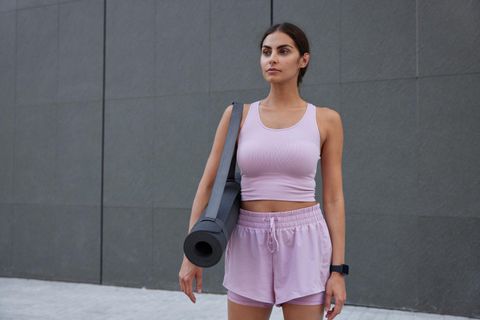
A Gym wear Set for ladies loose fit may include relaxed-fit T-shirts, breathable joggers, or oversized training tops. Such combinations can be appropriate for walking, light exercise, and casual fitness activities.
For high-intensity workouts, however, garment stability, fabric stretch, and suitable support may be more important than a relaxed silhouette.
Recent Updates and Women's Activewear Trends
During 2025 and 2026, activewear trends have increasingly combined fitness functionality with everyday fashion. Market research and fashion-industry coverage identify comfort, versatility, inclusive designs, and improved fabric technology as important developments in India's sportswear market.
Growth of Athleisure Fashion
Athleisure combines athletic clothing with casual fashion. Leggings, oversized T-shirts, coordinated sets, and lightweight jackets are increasingly worn outside traditional exercise environments.
A report published by Euromonitor in January 2026 highlighted the importance of comfort, versatility, fitness awareness, and inclusive design in India's sportswear industry.
Popular Trends in 2026
Some notable developments include:
Matching co-ord sets: Coordinated leggings, sports bras, and tops create consistent outfits.
Oversized gym clothing: Relaxed silhouettes provide an alternative to fitted training garments.
Seamless leggings: Reduced seam construction can minimize certain friction points.
Neutral colours: Sage green, beige, chocolate brown, grey, and muted shades remain prominent in contemporary styling.
Bold colours: Red, blue, and other vibrant shades add contrast to fitness outfits.
Versatile layers: Lightweight jackets, zip-up tops, and relaxed track pants support changing daily activities.
Fashion publications also identified layering, coordinated shorts sets, and versatile sportswear as notable 2026 trends.
Fabric and Technology Developments
Fabric innovation is another important area of development.
| Fabric or technology | Main characteristics | Common applications |
|---|---|---|
| Polyester blends | Lightweight and quick-drying | Training tops |
| Nylon blends | Smooth texture and durability | Premium women's leggings |
| Elastane or spandex | Stretch and flexibility | Sports bras and leggings |
| Recycled polyester | Uses recycled plastic-based fibres | Selected activewear collections |
| Seamless construction | Reduced seam placement | Yoga clothing and leggings |
| Moisture-wicking finishes | Helps manage perspiration | Running and gym clothing |
These properties vary according to fabric composition, manufacturing quality, and finishing methods. Recycled materials do not automatically make a garment environmentally sustainable; durability, production, and end-of-life handling also matter.
Changing Consumer Preferences
A September 22, 2026, industry report from Business of Fashion discussed the growing influence of gyms, marathons, running clubs, and sports communities on India's sportswear industry.
The report also highlighted the increasing attention global brands are giving to India's fitness market. <Link url="https://businessoffashion.com/" title="Business of Fashion"/>.
These developments suggest that activewear is becoming relevant to a wider range of activities rather than being limited to traditional gym routines.
Laws, Policies, and Clothing Standards in India
Women's activewear manufacturers, retailers, and consumers should understand the regulations that may apply to textile products in India.
Clothing regulations generally address product declarations, consumer information, packaging, and advertising accuracy. Requirements can differ depending on whether garments are packaged, sold individually, imported, or distributed through online platforms.
Important Regulatory Frameworks
Legal Metrology Act, 2009, and Packaged Commodities Rules, 2011
Applicable pre-packaged clothing products may be subject to prescribed declarations. Depending on the packaging and product category, relevant information can include:
Manufacturer, packer, or importer details.
Product description.
Quantity or number of units, where applicable.
Maximum retail price.
Consumer-care information.
Consumer Protection Act, 2019
The Act provides a framework against misleading advertisements, unfair trade practices, and deceptive consumer representations. Claims about fabric composition, product performance, and garment characteristics should be accurate and supportable.
Consumer Protection (E-Commerce) Rules, 2020
Applicable online retailers and platforms must follow relevant requirements concerning product information, transparency, and consumer protection.
Bureau of Indian Standards (BIS)
Relevant Indian Standards may apply to particular textile products or materials. Manufacturers should verify whether any specific standard or compulsory certification requirement covers their product category.
Government Initiatives
The Ministry of Textiles supports the development of India's textile and apparel industry through various initiatives, including the Production Linked Incentive Scheme for Textiles and the PM MITRA programme.
These initiatives focus on textile manufacturing capabilities, investment, infrastructure, and industry development. They are not individual fitness clothing certification programmes.
Official information is available through the <Link url="https://texmin.nic.in/" title="Ministry of Textiles"/> and <Link url="https://consumeraffairs.gov.in/" title="Department of Consumer Affairs"/>.
Tools and Resources for Choosing Women's Activewear
Choosing appropriate clothing becomes easier when consumers understand fabric specifications, sizing, activity requirements, and garment construction.
Helpful Digital Resources
Size guides: Compare bust, waist, hip, and inseam measurements with individual brand charts.
Fabric composition labels: Check polyester, nylon, cotton, and elastane percentages.
Fitness applications: Apps such as Nike Training Club and Adidas Training provide workout guidance that can help identify clothing requirements for different activities.
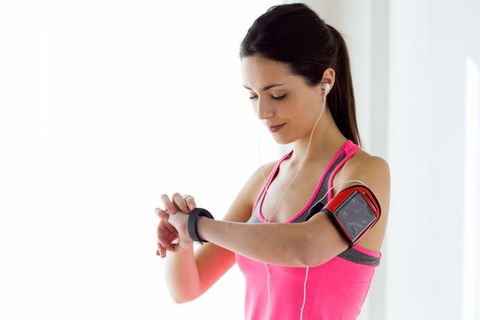
Activity trackers: Fitness applications and wearable devices help users understand their exercise routines and training environments.
Online product comparison: Review garment measurements, fabric descriptions, washing instructions, and return policies when researching Women's gym clothing online.
Textile information: Consult the Ministry of Textiles and BIS websites for relevant industry and standards information.
How to Evaluate Premium Women's Activewear
When comparing premium women's activewear, consider these practical factors:
Fabric composition: Understand the balance between stretch, breathability, durability, and moisture management.
Support level: Select sports bras according to the intensity and movement involved in the activity.
Fit: Check whether the waistband, shoulder straps, and garment length remain comfortable during movement.
Stitching: Examine seams, hems, and reinforced areas for consistent construction.
Transparency: Check leggings under normal movement and lighting conditions.
Maintenance: Read washing instructions to understand fabric-care requirements.
Understanding Activewear Brands
People researching the best activewear brands for women may compare international and Indian names such as:
Nike
Adidas
Puma
Reebok
Skechers
BlissClub
Decathlon
These brands have different product ranges, sizing systems, materials, and design approaches. Their inclusion is informational and does not represent a ranking or endorsement.
Women's activewear brands should be compared using measurable product characteristics rather than popularity alone.
Informational disclaimer: These estimated ranges are provided for general educational purposes. Actual prices vary according to brand, fabric, design, product specifications, taxes, and location. They are not guaranteed quotations.
Frequently Asked Questions
What is women's activewear?
Women's activewear refers to clothing designed for physical activities such as gym training, running, yoga, cycling, and walking. It commonly includes leggings, sports bras, shorts, T-shirts, and coordinated fitness outfits.
What should women consider when choosing gym clothing?
Important factors include fabric breathability, stretch, garment fit, support, stitching, comfort, and the type of physical activity. Clothing should allow unrestricted movement without unnecessary pressure or discomfort.
Are loose-fit gym wear sets suitable for exercise?
Yes. Loose-fit sets can be appropriate for walking, light workouts, and many casual fitness activities. For activities involving repeated jumping or fast movement, garment stability and appropriate support should also be considered.
What is the difference between regular leggings and women's premium leggings?
Differences may include fabric composition, stitching, waistband construction, stretch recovery, opacity, and finishing. Premium positioning does not automatically guarantee better performance, so specifications and individual fit should be evaluated.
How should activewear be maintained?
Follow the garment's care label. General practices include washing with similar colours, avoiding excessive heat, using appropriate detergents, and allowing garments to dry according to fabric instructions. Proper care can help preserve elasticity and fabric quality.
Conclusion
Women's activewear has developed into a combination of fitness clothing, functional design, and contemporary fashion. Modern collections include matching gym wear sets, loose-fit training outfits, performance leggings, supportive sports bras, and versatile everyday clothing.
Understanding fabric technology, garment construction, sizing, and activity requirements helps consumers make informed clothing decisions. Recent developments in inclusive design, seamless construction, sustainable materials, and athleisure also demonstrate how the category continues to evolve.
Whether exploring premium women's activewear or comparing everyday gym clothing, the most important considerations remain comfort, suitable support, practical functionality, and personal preference.

Related Post...
Explore Women’s Activewear Trends: Guide to Modern Fitness Fashion, Tips, and Insights
Updated: November 23, 2026
Read More