Guide To Root Canal Treatment: Insights, Advice, Basics, and Dental Knowledge
Root canal treatment, also called endodontic treatment, is a dental procedure used when the soft tissue inside a tooth, known as the dental pulp, becomes inflamed or infected. The pulp contains nerves, blood vessels, and connective tissue. Deep tooth decay, cracks, trauma, or repeated dental procedures can damage this tissue.
What Is Root Canal Treatment?
During treatment, the affected pulp is removed, the root canals are cleaned and shaped, and the space is filled and sealed. A final restoration, such as a filling or crown, may then be needed to protect the tooth.
Understanding root canal treatment can help people recognize why a dentist may recommend further examination when persistent tooth pain, sensitivity, swelling, or other symptoms occur. A dental X-ray may be used as part of the assessment.
The information below is for dental care education and does not replace an examination by a qualified dental professional.
Why Does a Tooth Need a Root Canal?
A healthy tooth has living pulp protected by enamel and dentin. When bacteria reach the pulp through advanced tooth decay or damage, inflammation or infection can develop.
Common contributing factors include:
- Deep dental caries or tooth decay
- Cracked or fractured teeth
- Dental trauma
- Repeated procedures on the same tooth
- Pulp inflammation
- Bacterial infection inside the tooth
Untreated pulp infection can sometimes result in an abscess or inflammation around the tooth's root.
Why Root Canal Knowledge Matters
Root canal treatment affects people of different ages, particularly those experiencing advanced tooth decay, dental trauma, or symptoms associated with pulp inflammation. Learning about the procedure can make dental discussions easier to understand.
The main purpose of endodontic treatment is to remove diseased pulp, clean and disinfect the internal tooth structure, and seal the canals. This approach can allow the natural tooth to remain functional when the tooth is considered suitable for treatment.
Who May Need Endodontic Evaluation?
A dentist or root canal specialist may consider an evaluation when a patient has:
- Persistent or recurring toothache
- Sensitivity to hot or cold
- Pain while chewing
- Swelling near a tooth
- A history of dental trauma
- Deep tooth decay
- An unusual change in tooth colour
Symptoms alone do not establish a diagnosis. Clinical examination and appropriate imaging are important for determining the cause.
Understanding RCT Treatment Price in India
Informational price disclaimer: RCT treatment price in India varies by city, tooth type, clinical complexity, diagnostic requirements, materials, restoration, and the dental professional's qualifications. Published online figures are indicative rather than guaranteed.
For example, a Practo India listing currently shows a Bangalore average of about ₹8,875, with listed figures ranging from ₹4,000 to ₹13,750. Such figures should be treated only as an online reference because individual treatment plans can differ.
| Factor | Why It Can Affect the Price |
|---|---|
| Tooth location | Molars can have more complex canal anatomy |
| Number of canals | Additional canals can require more clinical work |
| Infection complexity | More complicated cases may require additional visits |
| Imaging | Dental X-ray or CBCT may be indicated in selected cases |
| Restoration | A filling or crown may be required after treatment |
| Retreatment | Previously treated teeth can require additional procedures |
Types of Root Canal and Endodontic Treatment
Root canal treatment is not exactly the same in every case. The approach depends on the tooth, infection status, anatomy, previous treatment, and clinical findings.
Single-Visit Root Canal Treatment
Some suitable cases can be completed in one appointment. The dentist removes the affected pulp, cleans and shapes the canals, and seals them during the treatment sequence.
Multiple-Visit Root Canal Treatment
Some cases require more than one appointment. The additional time may be related to infection, drainage, complex anatomy, or the need to monitor the tooth between stages.
Endodontic Retreatment
If a previously treated tooth develops problems again, an endodontist may consider retreatment. The existing filling material is removed, the canals are examined and cleaned again, and the tooth is subsequently sealed and restored.
Endodontic Surgery
When conventional treatment cannot adequately address a problem, endodontic surgery may sometimes be considered. One example is an apicoectomy, which provides access to the area around the root tip.
Treatment for Traumatic Dental Injuries
Dental trauma can affect the pulp even when there is no obvious visible crack. Endodontic assessment may therefore be appropriate following certain injuries.
Benefits and Applications of Root Canal Treatment
The principal application of root canal treatment is management of inflammation or infection within a tooth while attempting to preserve the natural tooth when clinically appropriate.
Potential benefits include:
- Removing infected or inflamed pulp
- Cleaning and sealing the internal root canal system
- Maintaining the natural tooth
- Supporting normal chewing function
- Reducing the risk of progression of an untreated internal tooth infection
- Providing a basis for later tooth restoration
The American Association of Endodontists explains that maintaining a natural tooth can help preserve chewing function and reduce the need for replacement of an extracted tooth.
Typical Treatment Process
| Stage | What Usually Happens |
|---|---|
| Examination | Symptoms and tooth condition are assessed |
| Imaging | Dental X-ray may help evaluate the tooth and surrounding structures |
| Anesthesia | Local anesthesia is commonly used |
| Access | An opening is created to reach the pulp |
| Cleaning | Inflamed or infected pulp is removed |
| Shaping | Root canals are cleaned and shaped |
| Filling | Canals are filled and sealed |
| Restoration | A suitable filling or crown may protect the tooth |
A dental dam is commonly used to isolate the tooth during treatment, while gutta-percha is generally used to fill the prepared root canals.
Examples of Major Dental Healthcare Providers in India
The following are examples of large dental or healthcare organizations that people may encounter when researching dental care in India. This is not a ranking or endorsement, and availability of endodontic treatment varies by location.
- Apollo Hospitals
- Manipal Hospitals
- Clove Dental
- Aster Hospitals
- Sabka Dentist
When researching a best root canal dentist or root canal specialist, useful considerations include professional registration, relevant training in endodontics, experience with the type of tooth involved, diagnostic approach, and explanation of available treatment options.
Recent Developments in Endodontics
Endodontics has increasingly incorporated digital imaging, microscopy, computer-assisted planning, and artificial intelligence research.
AI and Dental Imaging — 2025–2026
In September 2025, the American Association of Endodontists highlighted growing research into artificial intelligence applications in endodontic imaging, diagnosis, robotics, and prognosis.
On January 5, 2026, research discussion around 3D-model-guided endodontics described the emerging use of augmented reality and AI for digitally guided treatment planning.
In June 2026, the AAE discussed AI applications in 2D and 3D endodontic imaging, including automated segmentation of tooth structures and root canal anatomy. These technologies remain areas of development and should support, rather than replace, professional clinical judgment.
Updated CBCT Guidance
An updated AAE/AAOMR position statement on CBCT in endodontics was released in 2025. It emphasizes selective, patient-specific use rather than routine CBCT imaging and highlights training and radiation-safety considerations.
In August 2026, the AAE also discussed dynamic navigation, which combines three-dimensional imaging, digital planning, and real-time instrument tracking for selected endodontic procedures.
These developments demonstrate how digital tools are becoming part of modern endodontic education and clinical planning, while diagnosis remains dependent on professional assessment.
Laws, Regulations, and Oral Health Programs in India
Dental treatment in India operates within a regulatory framework covering dental education, professional registration, ethical conduct, and public oral health.
The National Dental Commission Act, 2023 provides the statutory framework for regulating dentistry and dental education in India. The National Dental Commission's current information portal also lists the NDC Act, 2023 and NDC Rules, 2024 among its regulatory materials.
Professional ethical requirements also address matters such as communication of professional fees, patient interests, applicable laws, and professional conduct.
India's National Oral Health Programme (NOHP) supports oral healthcare through public health facilities. According to the National Oral Health Division, the programme has supported thousands of dental care units across States and Union Territories.
The Ministry of Health and Family Welfare also maintains standard treatment guidance covering oral health topics such as dental caries and periodontitis.
Tools and Resources for Dental Care Education
Several resources can help people understand root canal treatment and general oral health.
Dental X-Ray and Imaging
Dental X-rays help clinicians evaluate tooth structures and surrounding areas. CBCT can provide three-dimensional information and may be considered selectively for complex cases. Current guidance emphasizes that CBCT should be based on clinical indications rather than used routinely.
e-DantSeva
India's National Oral Health Programme includes e-DantSeva, an oral-health website and mobile application intended to provide public oral-health information. The Ministry's 2024–25 annual report describes its continued development and programme activities.
Professional Registries
The National Dental Commission portal provides access to dentist registration information and other regulatory resources, which can help people understand professional registration in India.
Educational Resources
The American Association of Endodontists provides patient education covering root canal treatment, retreatment, endodontic surgery, and related topics.
Frequently Asked Questions
Is root canal treatment the same as endodontic treatment?
Root canal treatment is one type of endodontic treatment. Endodontics is the dental specialty concerned with the dental pulp and tissues surrounding the roots of teeth.
How many visits are usually required?
Some root canal cases can be completed in one appointment, while others require multiple visits. The number depends on the tooth, infection, anatomy, and clinical circumstances.
Is a dental X-ray needed?
Dental X-rays are commonly used during assessment and treatment planning. More advanced imaging such as CBCT is generally considered selectively when additional three-dimensional information is clinically useful.
Can a root canal-treated tooth need treatment again?
Yes. A previously treated tooth can sometimes develop persistent or new problems. Retreatment or, in selected situations, endodontic surgery may be considered after professional evaluation.
How should someone choose a root canal specialist?
Consider professional registration, endodontic training, experience with the relevant type of case, diagnostic methods, and whether the dentist clearly explains the diagnosis and available treatment options. A specialist assessment may be appropriate for complicated cases.
Conclusion
Root canal treatment is an established form of endodontic treatment used to manage inflammation or infection within a tooth. Understanding dental pulp infection, tooth decay, dental X-rays, treatment stages, and restoration can make dental care discussions easier to follow.
Modern endodontics is also evolving through digital imaging, CBCT, microscopy, AI-assisted analysis, and computer-guided techniques. However, these technologies are tools for clinical decision-making rather than replacements for professional judgment.
For people researching Dental Treatment India, Rct Treatment Price, root canal treatment, endodontic treatment, or a root canal specialist, reliable educational resources and a qualified dental examination are important starting points. Prices and treatment approaches vary by individual circumstances, so online estimates should be treated as informational only.

Related Post...

Epoxy Water Paint Information: Explore Types, Uses, and Knowledge
Updated: October 05, 2026
Read More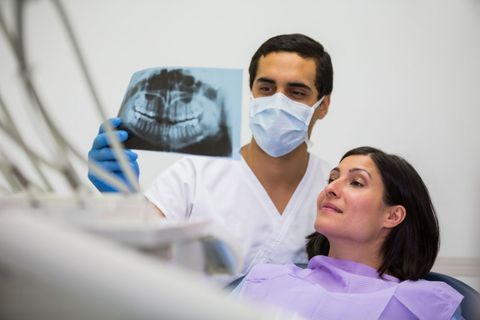
Guide To Root Canal Treatment: Insights, Advice, Basics, and Dental Knowledge
Updated: October 05, 2026
Read More
Explore Interior Design Virtual Consultation: Guide, Tips, and Insight
Updated: September 22, 2026
Read More