Polycarbonate Roofing Sheets Guide: Learn Basics, Detail, and Insights
Polycarbonate roofing sheets are lightweight thermoplastic panels used for roofing, skylights, canopies, greenhouses, walkways, and building envelopes. Their combination of impact resistance, light transmission, relatively low weight, and weather resistance makes them useful in residential, agricultural, commercial, and industrial projects.
What Are Polycarbonate Roofing Sheets?
Polycarbonate roofing sheets are lightweight thermoplastic panels used for roofing, skylights, canopies, greenhouses, walkways, and building envelopes. Their combination of impact resistance, light transmission, relatively low weight, and weather resistance makes them useful in residential, agricultural, commercial, and industrial projects.
Unlike opaque roofing materials, many polycarbonate roof panels allow natural daylight to enter a structure. Depending on the design, they can also provide thermal insulation, solar control, or diffused light.
The material is available in several structures, including solid, corrugated, twin wall, triple wall, and more complex multiwall configurations. Manufacturers also produce panels with UV-protective layers, light-diffusing surfaces, condensation-control treatments, and solar-control options.
Common applications include:
- Industrial roofing panels
- Polycarbonate greenhouse roofing
- Commercial skylights
- Covered walkways and canopies
- Agricultural structures
- Atriums and architectural roofs
- Parking covers
- Translucent sections within metal roofs
Why Polycarbonate Roofing Matters Today
Roofing systems increasingly need to balance daylight, thermal performance, structural requirements, durability, and energy considerations. Polycarbonate can address several of these requirements within a single material system.
For commercial and industrial buildings, daylighting can reduce dependence on artificial lighting during suitable daylight hours. Multiwall structures can also create air spaces within the panel, helping improve thermal insulation compared with many single-layer transparent materials.
Polycarbonate roofing for commercial buildings is therefore used in areas where natural light and weather protection are both important.
The material is also relevant to agriculture. Polycarbonate greenhouse roofing can transmit and diffuse sunlight while providing a rigid covering for protected cultivation. Recent technical discussions in India have highlighted growing interest in multiwall panels where controlled light diffusion is important for greenhouse environments.
When selecting a system, designers normally consider:
- Local climate and temperature variation
- Wind and other structural loads
- Roof slope and drainage
- Required light transmission
- Thermal insulation
- UV protection
- Fire-performance requirements
- Panel thickness and structure
- Supporting frame design
Types of Polycarbonate Roofing
Polycarbonate roofing is not a single product category. Different panel structures provide different combinations of strength, insulation, transparency, and appearance.
| Type | Main Characteristics | Typical Applications |
|---|---|---|
| Solid polycarbonate | Flat, transparent, high impact resistance | Canopies, glazing, architectural roofs |
| Corrugated polycarbonate | Profiled lightweight panels | Industrial roofs, skylights, agricultural structures |
| Twin wall polycarbonate roofing | Two layers with an internal air space | Canopies, greenhouses, residential roofing |
| Multiwall polycarbonate | Multiple internal chambers | Commercial buildings, greenhouses, insulated roofs |
| Triple-wall panels | Additional internal structure | Projects requiring increased insulation |
| Modular systems | Interlocking or connected panels | Architectural roofing and façades |
Twin wall polycarbonate roofing is particularly common where lightweight construction and basic thermal insulation are required. Multiwall products can provide additional insulation as the number and arrangement of internal layers increase.
Benefits and Applications
One major advantage of polycarbonate is its strength-to-weight relationship. The panels can be significantly lighter than glass while still providing useful impact resistance.
Other potential benefits include:
- Natural daylight transmission
- Lightweight handling
- UV-protective options
- Thermal insulation through multiwall construction
- Resistance to weather exposure
- Design flexibility
- Availability in clear, translucent, tinted, and opaque forms
- Suitability for curved or profiled applications
For industrial buildings, polycarbonate roofing can be incorporated as rooflights or larger daylighting sections. Palram, for example, describes corrugated polycarbonate products for industrial roofing, cladding, skylights, and daylighting applications.
Multiwall panels can be useful where thermal performance is more important. Palram's SUNLITE range includes twin-wall, triple-wall, and X-Lite structures and is designed for applications including architectural roofing and greenhouse panels.
In greenhouse applications, light quality is an important consideration. Diffused light can distribute incoming sunlight more evenly through a growing area, making panel selection different from ordinary residential roofing.
Five Established Polycarbonate Roofing Providers
The following companies are established manufacturers or technology providers with documented polycarbonate roofing and building-panel ranges. This is an informational list, not a ranking.
Palram: Its portfolio includes corrugated sheets, multiwall panels, solid sheets, and architectural systems. Its products cover industrial, agricultural, commercial, and residential applications.
Danpal: Danpal develops translucent polycarbonate roofing systems using modular and dry-glazed approaches for architectural and commercial applications.
Brett Martin: Its Marlon range includes multiwall, twin-wall, corrugated, and specialist polycarbonate products for roofing, glazing, greenhouses, and daylighting.
Exolon Group: Exolon produces multiwall polycarbonate sheets and panel systems for roofing, façades, skylights, and energy-conscious building applications.
Gallina: Gallina manufactures multiwall, solid, corrugated, and modular polycarbonate systems used for roofing, skylights, greenhouses, façades, and industrial applications.
When evaluating polycarbonate roofing suppliers or polycarbonate roofing contractors, project specifications should be checked against structural drawings, panel technical data, installation instructions, and applicable local requirements.
Recent Updates and Industry Trends
Recent developments have focused on improving thermal performance, daylight control, sustainability, and greenhouse applications.
In 2026, Gallina's published product information continues to emphasize multiwall systems, daylighting, thermal insulation, recyclable polycarbonate, and specialized surface treatments. Its website also records architectural and product-related updates during March 2026.
Another notable direction is the development of lower-impact material formulations. Brett Martin's Marlon BioPlus uses a bio-circular attributed resin in which a substantial proportion of fossil-based raw material is replaced with renewable hydrocarbons while maintaining the material's stated performance characteristics.
Exolon also published updated information in July 2026 for its Click Panel 60 HX, emphasizing thermal insulation, lightweight construction, daylighting, and sustainable building applications.
For Indian greenhouse applications, a recent August 2026 technical article discussed the growing role of multiwall polycarbonate in controlled cultivation, particularly the importance of light diffusion rather than simply maximum light transmission.
Overall, current development is moving toward better daylight management, improved insulation, solar control, condensation management, and more resource-conscious material options.
Laws, Standards, and Policies in India
Polycarbonate roofing projects in India can be affected by building regulations, structural requirements, fire-safety provisions, and local approval procedures.
The National Building Code of India 2016 (NBC 2016) provides a broad framework covering building requirements, fire and life safety, building materials, structural design, construction practices, and sustainability. It is intended as a model code for adoption by relevant authorities and agencies.
BIS also provides a Know Your Standard platform where users can search Indian Standards by standard number or product keyword and review related documents, amendments, testing information, and certification details.
For greenhouse construction, IS 15827:2019 addresses cladding films for greenhouse and polyhouse applications. This standard is relevant to greenhouse covering materials, although it should not automatically be treated as a general specification for every polycarbonate roofing sheet.
Project teams should therefore verify the applicable Indian Standards, fire requirements, structural design criteria, local development rules, and approval requirements for the particular building and location.
Useful Tools and Resources
Several resources can help with specification and planning:
- BIS Know Your Standard: Search Indian Standards and related technical information.
- National Building Code of India: Reference for building, structural, fire-safety, and construction requirements.
- Manufacturer technical guides: Useful for panel thickness, fixing patterns, thermal movement, cleaning, and installation details.
- Load and span tables: Help engineers assess panel selection against structural requirements.
- Roof slope calculations: Useful for determining drainage requirements.
- Light-transmission data: Helps compare clear, diffused, tinted, and opaque panels.
- Thermal-performance data: U-values and related information can help compare multiwall structures.
- Polycarbonate roofing installation guides: Manufacturer instructions should be followed for fasteners, sealing, expansion allowance, UV orientation, and panel handling.
For example, Brett Martin specifies design considerations such as thermal movement, minimum roof slope, UV orientation, and expansion allowance for its Marlon ST products.
Informational Disclaimer: Information presented in this article is intended solely for educational purposes only.
Frequently Asked Questions
What is polycarbonate roofing mainly used for?
It is used for daylighting, roofing, skylights, greenhouses, canopies, walkways, industrial structures, and architectural applications where lightweight and translucent materials are useful.
Is twin wall polycarbonate suitable for roofing?
Yes. Twin wall panels are commonly used for lightweight roofing, canopies, greenhouses, and similar applications. The appropriate thickness depends on span, loading, climate, support spacing, and design requirements.
What is the difference between solid and multiwall polycarbonate?
Solid polycarbonate is a single dense sheet, while multiwall polycarbonate contains internal chambers or layers. Multiwall construction generally provides greater thermal insulation for a comparable lightweight roofing application.
Does polycarbonate need UV protection?
UV-protective treatments are commonly incorporated into roofing products to improve resistance to ultraviolet exposure. The manufacturer's specified UV-protected surface should be correctly oriented during installation.
How should polycarbonate roofing be selected?
Selection should consider panel type, thickness, span, structural loads, light transmission, thermal requirements, UV protection, fire performance, roof slope, local climate, and applicable Indian standards.
Conclusion
Polycarbonate roofing sheets provide a flexible option for applications where daylight, low weight, impact resistance, and thermal performance are important. The available choices range from solid and corrugated panels to twin wall polycarbonate roofing and advanced multiwall systems.
For industrial roofing panels, commercial buildings, greenhouses, and architectural projects, the correct specification depends on the building's structural requirements and environmental conditions. Polycarbonate roofing suppliers and contractors can provide product-specific information, but the final selection should be based on technical documentation and applicable regulations.
Current developments increasingly emphasize daylight control, thermal efficiency, greenhouse light diffusion, solar management, and more resource-conscious material formulations. With appropriate specification and installation, polycarbonate roof panels can be incorporated into a wide range of modern building and agricultural designs.

Related Post...
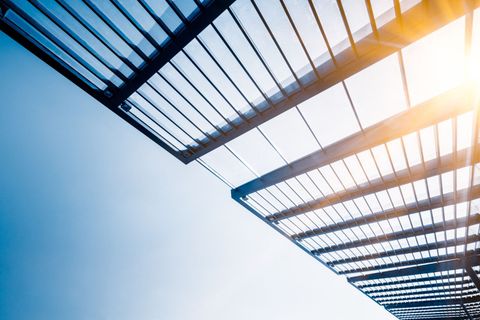
Polycarbonate Roofing Sheets Guide: Learn Basics, Detail, and Insights
Updated: October 08, 2026
Read More