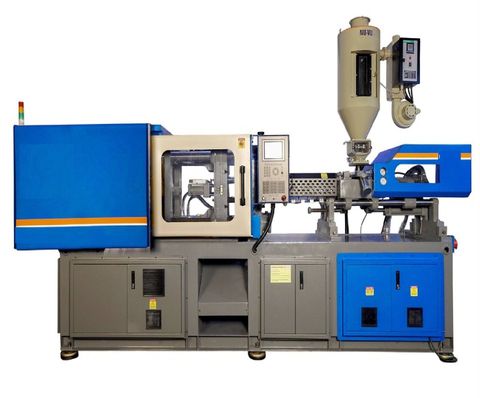
Discover Injection Molding Machine: Explanation, Technology Insight, and Tips
Injection molding machines are industrial systems used to transform plastic materials into shaped components through controlled heating, injection, cooling, and ejection. They are widely used for products ranging from packaging and household components to automotive, electronics, medical, and industrial parts.
Modern injection molding technology combines mechanical systems, electronic controls, sensors, software, robotics, and process monitoring. The development of electric drives, automation, precision controls, and data-based monitoring has expanded the capabilities of these machines.
What Are Injection Molding Machines?
An injection molding machine heats plastic material until it reaches a suitable processing condition and then injects it into a mould under controlled pressure. After the material cools and solidifies, the mould opens and the component is removed.
A typical machine includes:
- Injection unit
- Plasticizing screw and barrel
- Clamping unit
- Mould system
- Hydraulic or electric drive systems
- Temperature and pressure controls
- Controller and monitoring interface
- Material feeding equipment
The basic objective is to produce repeatable components while controlling dimensions, cycle time, material usage, and process stability.
Modern industrial plastic molding machines may also connect with robots, conveyors, sensors, mould-temperature controllers, and production-monitoring software.
Why Injection Molding Machines Matter Today
Injection molding is important because many industries require large quantities of consistent plastic components. A properly configured machine can repeat the same production cycle many times while maintaining defined process parameters.
The technology affects manufacturers of:
- Automotive components
- Consumer electronics
- Medical and laboratory products
- Food and beverage packaging
- Household products
- Electrical components
- Construction products
- Industrial equipment
The main problems addressed by modern systems include dimensional variation, material waste, inconsistent cycle times, manual handling, and difficult process monitoring.
Automation is also becoming more significant. Injection molding automation can connect machines with robots, inspection equipment, material handling systems, and production software.
Key Technology Comparison
| Machine type | Main characteristic | Typical application |
|---|---|---|
| Hydraulic | Hydraulic drive system | General-purpose moulding |
| Electric | Electrically driven movements | Precision and repeatable production |
| Hybrid | Combination of electric and hydraulic systems | Flexible industrial production |
| High-speed | Optimised for rapid injection and cycles | Packaging and thin-wall components |
| Vertical | Vertical clamping arrangement | Insert and overmolding |
| Multi-component | Handles multiple materials or colours | Complex products |
Types of Injection Molding Machines
Different machine designs are selected according to material, component geometry, production volume, precision requirements, and mould characteristics.
Hydraulic Injection Molding Machines
Hydraulic machines use hydraulic systems to generate clamping and injection movement. They have been widely adopted for general industrial applications and are available across a broad range of machine sizes.
Electric Injection Molding Machines
An electric injection molding machine uses electrically driven mechanisms rather than relying primarily on hydraulic movement. Electric systems can provide accurate movement control, repeatability, and efficient operation.
Hybrid Injection Molding Machines
Hybrid machines combine electric and hydraulic technologies. This configuration can balance precision, power, and flexibility for applications requiring different operating characteristics.
High-Speed Injection Molding Machines
A high speed injection molding machine is designed for applications requiring rapid injection and short production cycles. Packaging, thin-wall products, and certain consumer components can benefit from high-speed processing.
Precision Injection Molding Machines
A precision injection molding machine focuses on accurate control of injection, pressure, temperature, mould movement, and repeatability. Such machines are relevant for components with tight dimensional requirements.
Vertical Injection Molding Machines
Vertical machines are frequently used for insert molding and overmolding. Their configuration can make it easier to position inserts before the moulding cycle.
Multi-Component Machines
These machines can process two or more materials or colours within a single component. They are used where combining materials can create functional or aesthetic characteristics.
Benefits and Applications
Modern machines can provide several technical and operational benefits when appropriately matched with the mould, material, and production process.
Major Benefits
- Repeatable production cycles
- Controlled injection pressure and temperature
- Consistent component dimensions
- Integration with robots and automation
- Reduced manual handling
- Data collection for process monitoring
- Support for recycled and specialised materials
- Flexible machine configurations
- Potentially improved energy efficiency with modern drive systems
Applications extend across many industries.
Automotive: dashboards, interior components, clips, housings, lighting components, and technical parts.
Packaging: containers, caps, closures, thin-wall packaging, and household packaging components.
Electronics: housings, connectors, switches, structural components, and protective covers.
Medical: selected laboratory, diagnostic, and medical-device components manufactured under appropriate controlled conditions.
Consumer products: handles, containers, appliance components, toys, and household items.
Industrial products: gears, fittings, housings, technical components, and machine parts.
The growing use of custom injection molding equipment allows production systems to be configured around specific moulds, materials, automation requirements, and component characteristics.
Five Leading Injection Molding Machine Providers
The following companies are established participants in the global injection molding equipment industry. This list is informational rather than a ranking.
- Haitian International – Its portfolio includes servo-hydraulic, two-platen, electric, and multi-component technologies. Haitian India lists Venus, Jenius, Mars, Jupiter, and Iapetus machine families.
- ENGEL – Known for electric and hydraulic injection molding technologies, integrated automation, digital process monitoring, and advanced production cells. Its K 2025 presentation highlighted AI, automation, digitalisation, and sustainability.
- ARBURG – Its ALLROUNDER range includes electric, hybrid, hydraulic, and vertical injection molding machines, along with specialised processing technologies.
- Sumitomo (SHI) Demag – Its portfolio includes all-electric, hybrid, servo-hydraulic, high-speed, and multi-component machines.
- Milacron – Its injection portfolio includes electric, servo-hydraulic, low-pressure, multi-component, and co-injection technologies.
When comparing injection molding machine suppliers, technical specifications, machine configuration, application requirements, applicable standards, mould compatibility, automation requirements, and local technical capabilities should be evaluated rather than relying only on brand recognition.
Recent Technology Updates and Industry Trends
The period from 2025 into 2026 has seen increased attention toward electrification, automation, artificial intelligence, energy efficiency, and integrated production systems.
At K 2025, ENGEL presented AI-based technologies, including a self-regulating injection molding cell designed to monitor and optimise production processes. The company also demonstrated automation and digital assistance technologies.
Haitian introduced the Zhafir Zeres F electric machine generation at K 2025. The company highlighted high-speed operation, AI-supported tool monitoring, and energy-related improvements.
ARBURG presented the ALLROUNDER TREND electric machine series at K 2025, with machines covering clamping forces from 500 to 2,000 kN. Its presentation also emphasised digitalisation, circular economy concepts, and energy efficiency.
In February 2026, Haitian participated in PLASTINDIA 2026 in New Delhi, demonstrating servo-hydraulic, high-speed, robotic insert-molding, and all-electric technologies for applications including automotive and precision components.
Another continuing trend is the combination of machines with robots, sensors, machine-learning systems, production software, and automated inspection. These developments are gradually moving injection molding toward more connected production environments.
Laws, Standards, and Policies in India
For Indian users, machinery safety and plastic-waste regulations are important areas to consider.
The Bureau of Indian Standards (BIS) has included machinery for working rubber and plastics within the Machinery & Electrical Equipment Safety framework. BIS documentation identifies injection molding machines with relevant Indian Standards, including IS 16819:2018 / ISO 12100:2010 for general machinery safety and references IS/ISO 20430 for injection molding machine requirements.
BIS also provides a Know Your Standard portal where users can search standards by number or product-related keyword and access information concerning standards, amendments, notifications, laboratories, and related certification information.
Plastic-waste rules are another important consideration. India's Extended Producer Responsibility framework establishes recycling and recycled-content obligations for specified plastic packaging categories. CPCB guidance includes progressively increasing recycling targets for several packaging categories, including targets applicable during 2025–26 and later periods.
The exact regulatory obligations depend on the machine application, plastic material, finished product, packaging category, and role of the organisation within the plastics value chain. Users should verify current requirements with the relevant Indian authority before making compliance decisions.
Tools and Resources
Several resources can help readers understand machine selection, process planning, standards, and production technology.
- BIS Know Your Standard: Useful for checking Indian Standards and related documentation.
- CPCB Plastic Waste Resources: Useful for understanding plastic-waste and EPR requirements.
- Machine specification sheets: Useful for checking clamping force, injection capacity, screw diameter, injection speed, and mould dimensions.
- Mould-flow analysis software: Helps engineers study filling, cooling, shrinkage, and potential moulding issues.
- Energy-monitoring systems: Can help compare electricity consumption across production cycles.
- Process-monitoring dashboards: Useful for tracking pressure, temperature, cycle time, alarms, and production parameters.
- Material datasheets: Important for understanding processing temperatures and recommended conditions.
- Machine selection worksheets: Can help compare clamping force, shot size, mould dimensions, cycle requirements, and automation needs.
For any published machine or equipment price estimate, figures should be treated as indicative only because specifications, configuration, location, taxes, installation requirements, and market conditions can substantially affect the final figure. This article does not provide commercial quotations or package estimates.
Frequently Asked Questions
What is an injection molding machine?
It is a machine that heats plastic material and injects it into a mould under controlled conditions. After cooling, the mould opens and the finished component is removed.
What is the difference between hydraulic and electric machines?
Hydraulic machines use hydraulic systems for major movements, while electric machines use electrically driven mechanisms. Electric designs can provide precise movement and repeatability, while hydraulic systems remain widely used across general industrial applications.
What does injection molding automation include?
It can include robots, part-removal systems, conveyors, inspection equipment, material handling, mould-temperature control, sensors, and production-monitoring software.
How is a machine's size determined?
Important factors include required clamping force, mould dimensions, component size, material characteristics, shot volume, injection pressure, and production requirements.
Are injection molding machines covered by Indian standards?
Relevant machinery can fall under Indian safety and conformity requirements. BIS documentation references standards applicable to machinery for working plastics and injection molding machines. Requirements should be checked against the latest applicable government notifications and standards.
Conclusion
Injection molding machines remain an important part of modern plastics manufacturing because they provide controlled and repeatable methods for producing components in many shapes and sizes. The technology now extends beyond basic hydraulic equipment to include advanced injection molding machines, electric drives, high-speed systems, precision controls, robotics, sensors, and digital monitoring.
Current developments show increasing interest in injection molding solutions that combine automation, energy efficiency, data analysis, and process control. Electric machines and intelligent production systems are particularly prominent areas of development.
For anyone researching injection molding technology, the most useful starting point is to understand machine types, mould requirements, materials, clamping force, injection capacity, automation possibilities, applicable standards, and the intended application. Comparing technical information from established injection molding machine suppliers and checking relevant Indian regulations can support more informed technical decisions.

Related Post...
Injection Molding Machine Overview: Knowledge, Advice, Applications, and Help
Updated: October 01, 2026
Read More
Read Roof Leak Detection and Repair: Complete Overview, Basics, and Advice
Updated: September 15, 2026
Read More
Discover Interior Design Virtual Consultation: Guide, Tips, and Insight
Updated: September 29, 2026
Read More