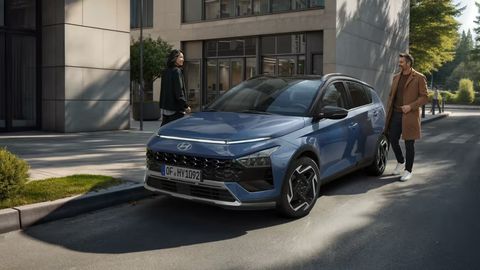
Upcoming Hyundai Bayon Guide: Discover Expected Feature, Specifications, and Essential Information
The Hyundai Bayon is a compact sport utility vehicle (SUV) developed by Hyundai for drivers seeking a combination of modern styling, everyday practicality, technology, and urban driving convenience. The model has been introduced in international markets, and Hyundai Motor India announced an India-specific version in September 2026.
Understanding the Hyundai Bayon
As of October 26, 2026, Hyundai has scheduled the Indian launch for today. The company has already disclosed several important specifications, including the engine, transmission options, digital displays, connected technologies, and driver-assistance features.
The Hyundai Bayon latest updates are particularly relevant to people comparing compact and midsize SUVs in India. However, international specifications should not automatically be treated as Indian specifications because equipment, powertrains, dimensions, and features can differ between markets.
A useful Hyundai Bayon buying guide should therefore examine confirmed information, distinguish estimates from official figures, and explain which details require verification before making a decision.
Why the Hyundai Bayon Matters to Indian Drivers
Indian motorists have different requirements depending on their daily travel, family size, road conditions, parking arrangements, and driving preferences. A compact SUV may appeal to people who want a relatively elevated driving position and flexible passenger space without choosing a larger vehicle.
The Hyundai Bayon is intended to expand Hyundai's SUV lineup in India. Its position within the market makes it relevant to drivers comparing vehicles such as the Hyundai Venue, Hyundai Creta, and other similarly positioned SUVs.
Potential areas of interest include:
Urban driving: Dimensions, visibility, steering response, and maneuverability can influence everyday usability.
Highway journeys: Engine performance, overtaking response, braking, and passenger comfort matter during longer trips.
Family requirements: Rear-seat space, luggage capacity, child-seat compatibility, and safety equipment influence practicality.
Technology: Infotainment, smartphone connectivity, voice controls, and connected-car functions can simplify certain driving tasks.
Long-term ownership: Fuel consumption, insurance, maintenance schedules, and replacement components affect overall expenditure.
The most suitable vehicle depends on individual requirements rather than its positioning or feature count alone.
Hyundai Bayon Latest Updates: Launch and Confirmed Features
Hyundai announced the Bayon name in India on September 14, 2026, and subsequently released design information and technical details. On October 12, the company disclosed major elements of the India-specification model, including its digital cockpit and connected technology.
Hyundai's October 21 announcement highlighted safety equipment, while its October 23 announcement detailed the petrol engine and transmission choices.
The Indian launch is scheduled for October 26, 2026. The manufacturer's final announcement should be consulted for the official variant lineup, final prices, and any details that remain unconfirmed.
These developments indicate that the Indian model is being presented as a technology-focused SUV rather than simply relying on exterior styling.
Hyundai Bayon Exterior Design
The India-specification Bayon adopts Hyundai's Art of Steel design language. The announced design features sculpted body surfaces, prominent fender shapes, and distinctive H-Edge lighting elements.
These elements give the vehicle a modern appearance while maintaining the familiar SUV body style.
When examining the Hyundai Bayon exterior design, consider the following details:
Front lighting arrangement and daytime running lights.
Wheel design and available wheel sizes.
Body proportions and rear visibility.
Ground clearance and suitability for local road conditions.
Exterior paint choices and the availability of contrasting roof colours.
Parking sensors and camera equipment, where fitted.
International versions may have different dimensions and equipment. Buyers should consult the final Indian specification sheet instead of assuming that every feature shown in overseas photographs will be available locally.
Hyundai Bayon Interior Features and Infotainment
The Indian Bayon has been announced with a digital cockpit built around two curved displays measuring 12.3 inches each. The arrangement combines the instrument display and infotainment screen into a broad digital interface.
Hyundai has also announced a connected navigation cockpit, generative AI voice-assistant technology, and Bluelink connected features.
The announced technology package includes:
A 12.3-inch digital instrument display.
A 12.3-inch infotainment display.
An integrated navigation and connected-car interface.
A generative AI voice assistant.
More than 70 announced Hyundai Bluelink connected features.
Over-the-air updates for supported vehicle controllers.
Multilingual interface support and embedded voice commands.
These functions can help drivers access navigation, vehicle information, and selected connected features. Actual availability and functionality may vary by variant, software configuration, connectivity, and subscription requirements.
A panoramic sunroof should not be assumed to be standard equipment. Buyers interested in Hyundai Bayon panoramic sunroof features should check the official Indian variant specifications before drawing conclusions.
Hyundai Bayon Full Specifications: Engine and Transmission
Hyundai has confirmed a four-cylinder, 1.5-litre MPi petrol engine for the Indian model. The announced output is 115 PS, with maximum torque of approximately 144 Nm.
The engine is paired with a choice of a six-speed manual transmission or Hyundai's Intelligent Variable Transmission (iVT).
| Specification | Announced Indian-model details |
|---|---|
| Vehicle type | SUV |
| Engine | 1.5-litre, four-cylinder MPi petrol |
| Maximum power | 115 PS |
| Maximum torque | Approximately 144 Nm |
| Manual transmission | Six-speed manual |
| Automatic transmission | Intelligent Variable Transmission (iVT) |
| Drive modes | Eco, Normal and Sport |
| Automatic-specific features | Dash Boost Mode and Sporty Drive Tech |
| Paddle shifters | Announced as part of the driving technology package; check variant availability |
| Fuel type | Petrol |
Specifications are based on Hyundai's published announcements and may vary by variant or final homologation.
Hyundai Bayon Petrol Engine Details
The 1.5-litre naturally aspirated petrol engine is intended to provide usable performance across everyday driving conditions.
Maximum power describes the engine's ability to produce output at higher engine speeds, while torque influences its pulling capability. Neither figure alone establishes real-world acceleration, refinement, or fuel efficiency.
The manual transmission may appeal to drivers who prefer direct gear selection. The iVT automatic is intended to simplify driving in congested urban traffic.
Hyundai has also announced Dash Boost Mode and Sporty Drive Tech for the iVT version, alongside Eco, Normal, and Sport driving modes.
Hyundai Bayon Real-World Mileage and Ownership Expenses
Official fuel-efficiency figures and independent road-test results should be checked before comparing the Bayon with competing vehicles. A confirmed real-world mileage figure should not be inferred from engine capacity or maximum power.
Actual mileage can vary according to:
Traffic congestion and average speed.
Air-conditioning usage and passenger load.
Road gradients and driving style.
Tyre pressure and vehicle maintenance.
The transmission and selected driving mode.
For a preliminary fuel-budget calculation, use this formula:
Estimated monthly fuel expenditure = monthly kilometres ÷ actual kilometres per litre × petrol price per litre.
For example, assume a vehicle travels 1,000 kilometres per month, returns 12 km/l, and petrol costs ₹100 per litre. The illustrative monthly fuel expenditure would be approximately ₹8,333.
This is a mathematical example, not a prediction of Hyundai Bayon mileage or a statement of current petrol prices.
Other Hyundai Bayon ownership expenses may include insurance, scheduled maintenance, tyres, parking, applicable taxes, and financing interest.
Informational disclaimer: This article is just for educational and information purpose only. The final ex-showroom price, on-road price, and variant-specific equipment should be verified through Hyundai's official Indian website or authorised dealerships. Any third-party estimate is indicative, not a confirmed quotation. On-road figures vary by location, insurance selection, registration charges, and applicable taxes.
Hyundai Bayon Safety Rating and ADAS Technology
Hyundai announced that the Indian Bayon would use its Global K Enhanced Platform and include Hyundai SmartSense Level 2 Pro ADAS technology.
The manufacturer has described the vehicle as engineered for five-star Indian safety standards. This is a manufacturer statement about its engineering objectives, not proof of an independently awarded five-star crash-test rating.
Advanced driver-assistance systems may help with specific driving tasks, but their availability and operation depend on the fitted equipment, road conditions, and system limitations.
When assessing the Hyundai Bayon safety rating, check whether an official Bharat NCAP or Global NCAP assessment has been published for the exact Indian model and variant.
Other factors worth reviewing include:
Airbag configuration.
Electronic stability control.
Anti-lock braking system.
Rear parking sensors and camera availability.
Seat-belt reminders and child-seat mounting provisions.
ADAS functions and their operating limitations.
Safety equipment can differ between variants. Drivers must remain attentive and retain control of the vehicle even when assistance systems are active.
Hyundai Bayon Variant Comparison: What to Check
The final Indian variant lineup and variant-specific prices should be verified from the manufacturer's launch information.
A practical comparison should examine:
| Feature | What to verify |
|---|---|
| Engine and transmission | Manual or iVT availability |
| Infotainment | Screen size, navigation, and smartphone compatibility |
| Safety | Airbags, electronic stability control, and ADAS |
| Convenience | Climate control, parking assistance, and keyless functions |
| Exterior | Wheel design, lighting, and paint options |
| Ownership | Warranty coverage, maintenance schedule, and insurance |
| Final price | Ex-showroom price and location-specific on-road amount |
Do not assume that every advertised technology is available on every variant. The presence of a feature in a launch announcement does not necessarily establish its availability across the complete lineup.
Laws, Policies, and Vehicle Regulations in India
The Hyundai Bayon must comply with applicable Indian motor-vehicle requirements before it can be registered and used on public roads.
Relevant regulatory frameworks include:
Motor Vehicles Act, 1988: Establishes the broader legal framework for motor vehicles, licensing, registration, and road use.
Central Motor Vehicles Rules, 1989: Include requirements concerning vehicle construction, safety, emissions, and related compliance.
Bharat Stage VI emission standards: Apply to relevant new vehicles under India's emissions framework.
Bharat NCAP: Provides a consumer-facing vehicle crash-safety assessment framework for eligible vehicles.
Motor insurance requirements: Third-party motor insurance is generally mandatory for vehicles used on public roads, subject to applicable law.
Buyers should also check registration requirements, applicable road taxes, insurance coverage, and current state-specific rules.
Regulatory compliance and crash-test ratings are different matters. A vehicle meeting mandatory approval requirements does not automatically have a publicly awarded five-star Bharat NCAP rating.
Tools and Resources for Research
Use the following resources to evaluate the Hyundai Bayon:
Hyundai India official website: Check launch announcements, specifications, variant information, warranty terms, and official pricing.
Bharat NCAP: Look for an independent crash-test assessment of the exact model.
ARAI and relevant government publications: Consult applicable vehicle certification, emissions, and regulatory information.
Fuel-efficiency calculator: Estimate fuel requirements using your expected monthly distance and observed mileage.
Insurance comparison worksheets: Compare policy coverage, deductibles, exclusions, and premiums.
Test-drive checklist: Record seat comfort, visibility, braking response, rear-seat space, road noise, and parking convenience.
For a balanced Hyundai Bayon review India, combine manufacturer specifications with independent road tests and your own assessment of the vehicle.
Frequently Asked Questions
1. When is the Hyundai Bayon launching in India?
Hyundai has scheduled the Indian launch for October 26, 2026. Consult the company's official announcements for the final launch details and variant information.
2. What engine does the Hyundai Bayon use in India?
The announced Indian model uses a 1.5-litre, four-cylinder MPi petrol engine producing 115 PS and approximately 144 Nm of torque.
3. Will the Hyundai Bayon have manual and automatic transmissions?
Yes. Hyundai has announced a six-speed manual transmission and an Intelligent Variable Transmission (iVT) for the Indian model.
4. What is the Hyundai Bayon price and features package?
The final price and variant-specific equipment should be checked against the manufacturer's official Indian launch information. Earlier estimates should not be treated as confirmed prices.
5. Does the Hyundai Bayon have a confirmed five-star safety rating?
Hyundai has announced that the vehicle is engineered for five-star Indian safety standards and includes Level 2 Pro ADAS technology. An independently awarded crash-test rating should be verified separately through the relevant assessment programme.
Conclusion
The Hyundai Bayon brings together a 1.5-litre petrol engine, manual and iVT transmission options, a dual-display digital cockpit, connected technologies, and announced driver-assistance features.
Its suitability will depend on the final variant specifications, confirmed pricing, real-world fuel efficiency, cabin practicality, safety assessments, and ownership requirements.
For an informed decision, verify the latest manufacturer announcements, compare the exact variants, and arrange a test drive. Separating confirmed specifications from estimates and promotional claims helps readers evaluate the vehicle using practical, verifiable information.

Related Post...
Hyundai HE1i Electric SUV Explained: Launch Details, Design Insight, and Latest Updates
Updated: October 16, 2026
Read More
Mercedes-Benz GLC Electric Guide: Explore Feature, Fact, Details, and EV Technology Insights
Updated: September 15, 2026
Read More
Airport Cab Booking Guide: Learn Reservation Tips, Travel Insights, Pickup Advice, and Transportation Guide
Updated: September 08, 2026
Read More